A Kilo of Winter Peas: Planning a Week Around the Shortest Season
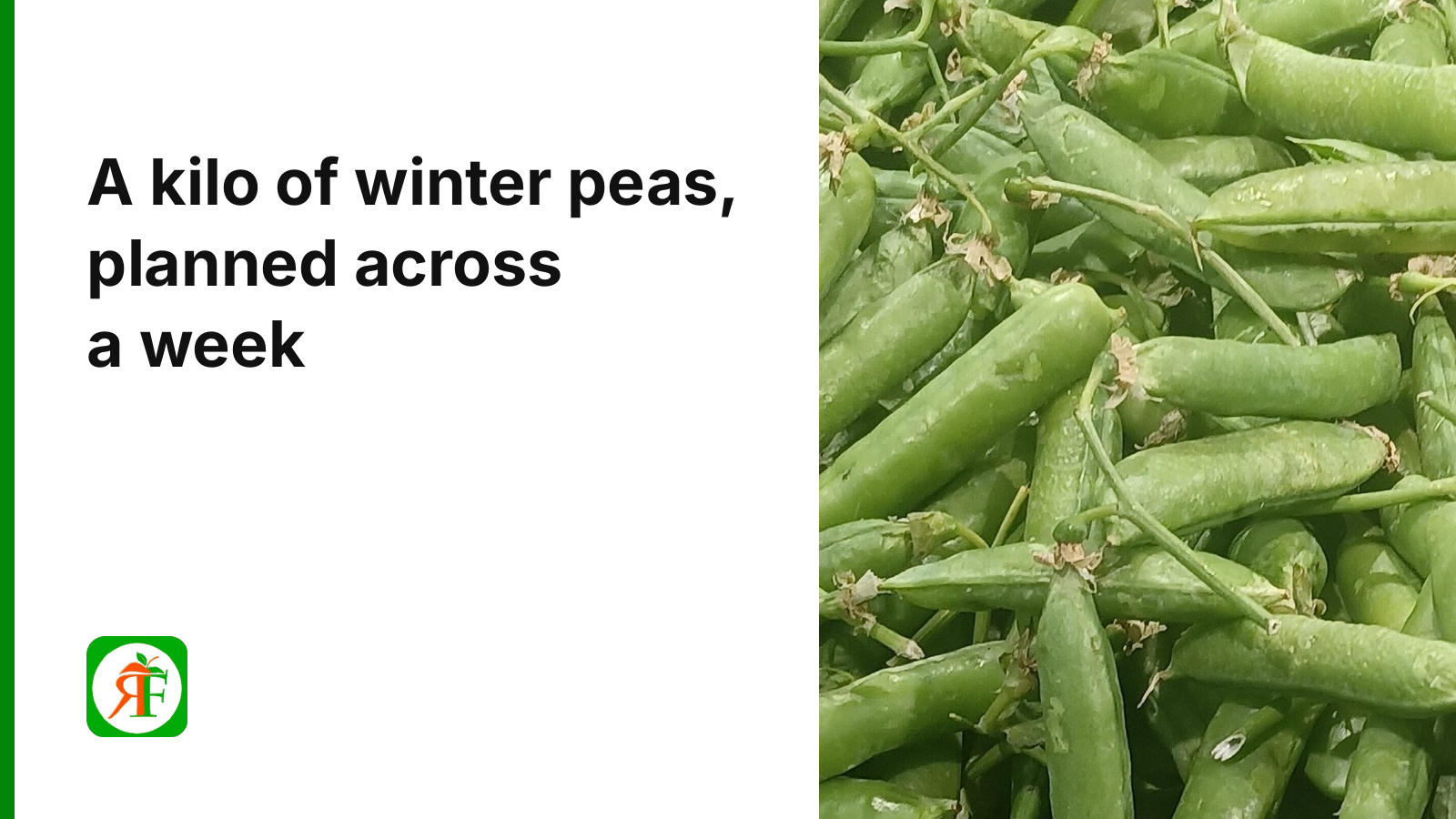
Every year there is a stretch of weeks when the market belongs to peas. Heaps of green pods sit on every stall, the vendor will happily sell you a kilo, and for a short time nothing in a bag from the freezer compares. Then the season turns, and the pods are gone until next winter.
That is exactly why peas deserve a plan. A kilo of pods looks like a lot on Sunday afternoon. By Wednesday, half of it is still in the bag and the pods have gone soft. A little planning makes sure the season ends up on your plates and not in the compost.
What a kilo of pods really gives you
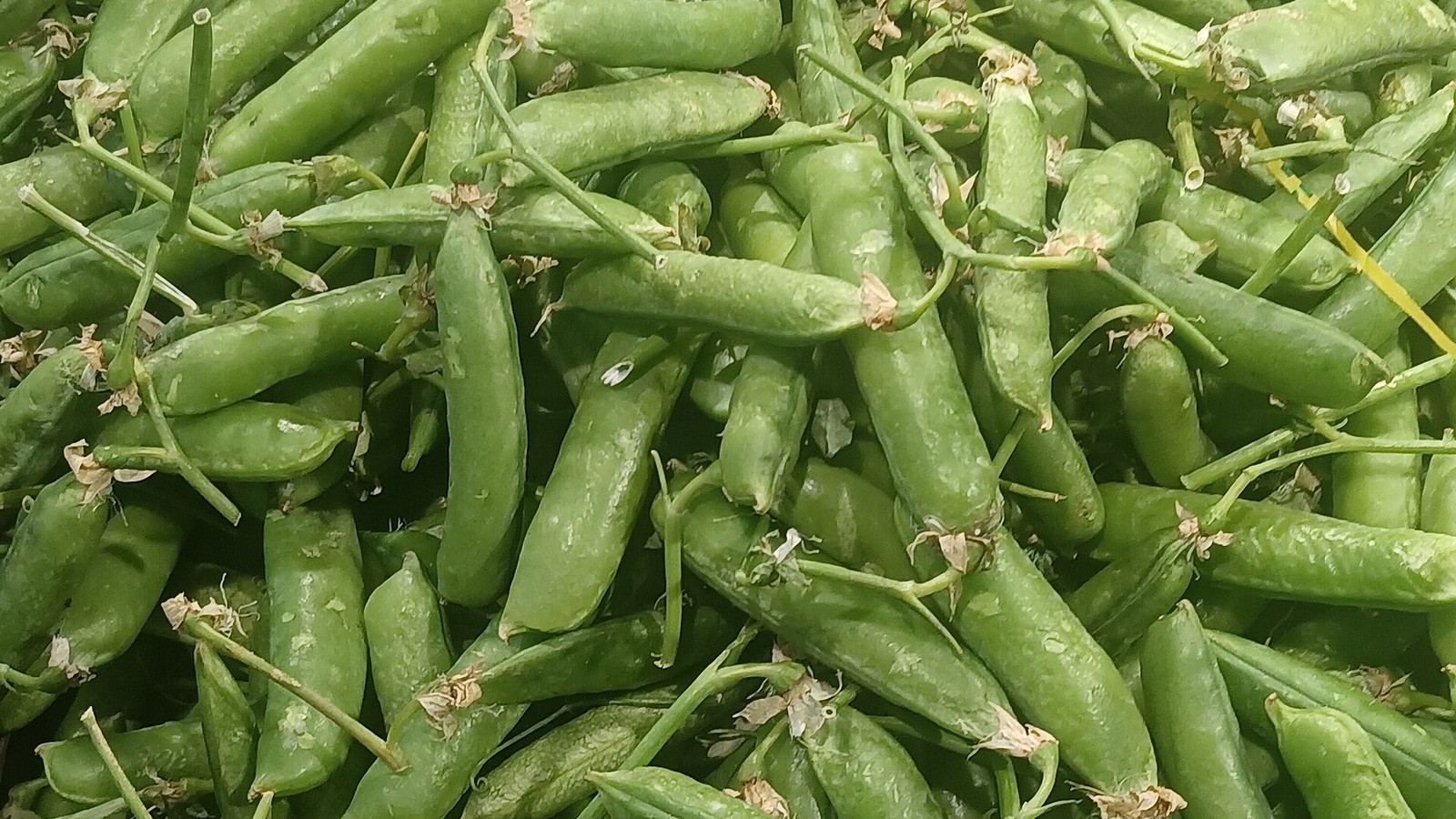
A kilo of pods does not mean a kilo of peas. Once the shells are gone, you will usually have a little under half of that by weight, which is enough for a few meals in a family kitchen. Buy a kilo, expect about two to three generous cupfuls of shelled peas, and plan around that.
When you choose pods, look for ones that are bright green and plump, with a bit of snap when you bend them. Pods that look pale, dry or wrinkled have been sitting for a while. Open one at the stall if the vendor lets you. Sweet peas taste fresh even when raw, and that is the best test there is.
Shell them together
Shelling is the part most people skip, and it is also the part worth keeping. It is slow, sociable work. Put a bowl in the middle of the table on Sunday afternoon, a second bowl for the empty pods, and turn on something to listen to. Children can help. So can anyone who is waiting for the kettle.
Eat a few raw while you work. Nobody is counting.
Once the peas are out, split them into portions right away. One portion for tonight, one for the next two days, and the rest in a covered box in the fridge. Having them already shelled is what turns a Thursday dinner into a ten-minute job instead of a half-hour one.
The week at a glance
Here is one way to spread a kilo across five dinners. It leaves room for the days you are eating out or finishing leftovers, and it uses things most kitchens already have.
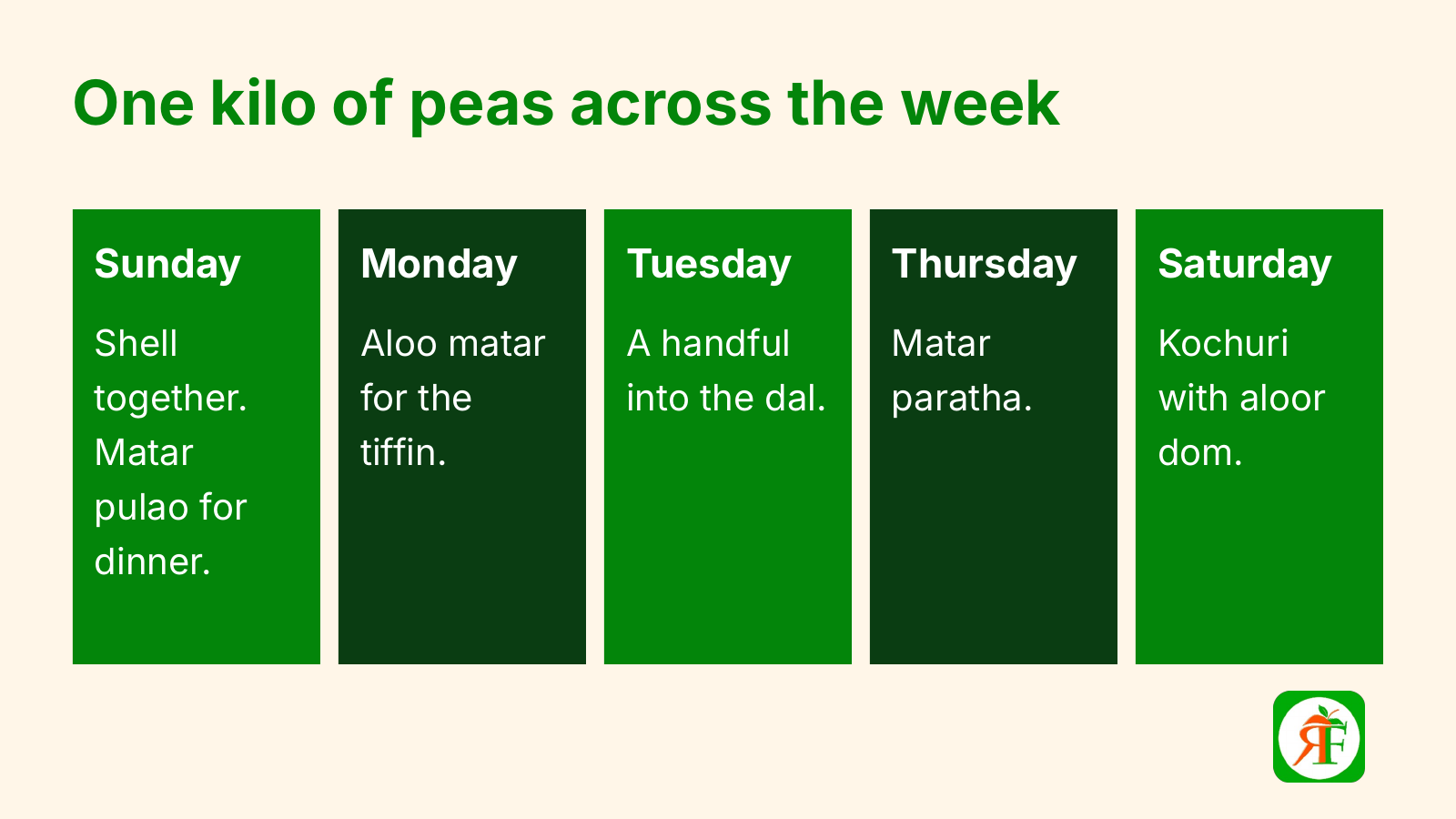
Sunday: matar pulao
Start with the simplest dish. Fry a little cumin and a bay leaf in ghee, add sliced onion, then a handful of peas and washed rice, and cook it all together with water. It is a one-pot dinner with a cooling bowl of curd beside it. The peas stay green and sweet because they only need the time the rice needs.
Monday: aloo matar for the tiffin
Aloo matar travels well. Cook potato cubes and peas in a light tomato and spice base, a little wet, and pack it with rotis. It is a good lunch box dish because it tastes just as good at noon as it did at breakfast.
Tuesday: peas in the dal
Cook the dal as you normally would. In the last five minutes, add a handful of peas straight into the pot. Finish with a fresh tadka. A plain bowl of dal turns into something that feels like a full dinner, and nobody has to cook another dish.
Thursday: matar paratha
Boil a cup of peas for a few minutes, drain and mash them coarsely with salt, roasted cumin and a little chopped green chilli. Roll a spoonful into the dough, flatten it gently and cook it on a hot tawa with a little ghee. Serve with curd or pickle. Parathas like this are quick once the filling is ready, and the filling can be made the day before.
Saturday: kochuri with aloor dom
For the weekend, do something slower. In Bengali kitchens the winter filling for kochuri is made from fresh peas, ground into a spiced paste and fried until the edges brown. Serve the kochuri hot with a plate of aloor dom. It takes an afternoon, and it is one of the best reasons to love the season.
Keep the plan loose
A plan is only useful if it survives the week. A few small rules help.
- Shell once, use twice. Shell all the peas on Sunday. Portions that are already done get cooked. Portions in the bag usually do not.
- Swap days freely. The order does not matter. If Tuesday turns into a leftovers night, move the dal to Wednesday.
- Use the pods. Rinse the empty pods and simmer them in water for a light stock to use in a soup or in the dal. Nothing needs to be thrown away on day one.
- Save a handful. If you can, keep a small portion back for the weekend kochuri. The rest of the week will usually try to use it up.
Eat the season while it lasts
Seasonal eating is not complicated. It means noticing what is plentiful, buying a bit more of it, and cooking it in more than one way across the week. Peas are one of the easiest places to practise that, because they are good in so many dishes and so brief in the market.
If you like to plan your week ahead, RiteFood can help you build a menu around what is fresh, with simple recipes and a shopping list that follows. RiteFood is available on Google Play, and the plan above is a good first week to try.
This article is meant as everyday cooking inspiration and is not dietary or medical advice.