
The Tiffin Tier List: How to Pack a Balanced Indian Lunch Box
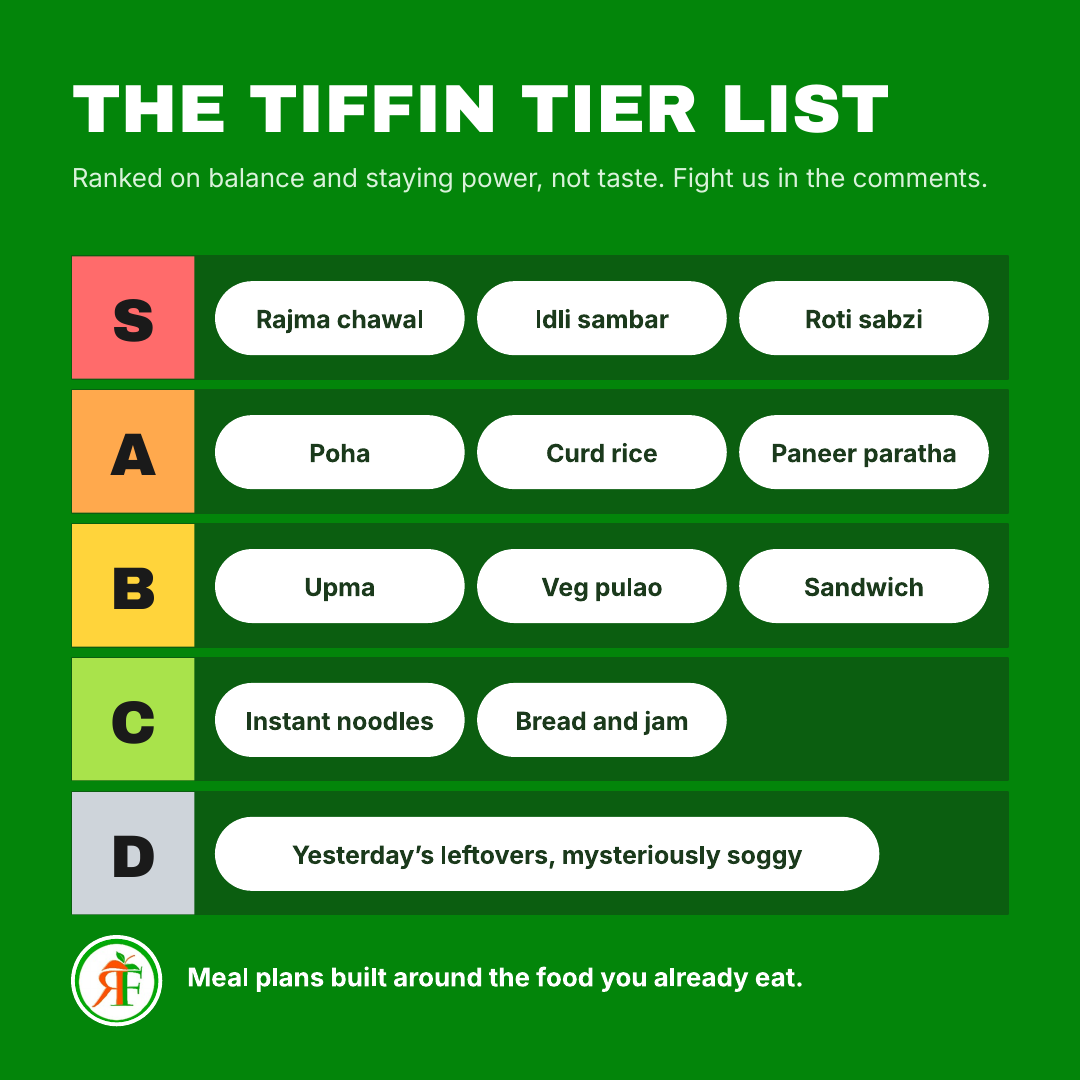
We ranked the classic Indian tiffin. Someone had to.
Before the comments arrive: this ranking is not about taste. Every dish on this list is loved by someone, and a cold sandwich eaten at a desk has its own charm. We ranked on two things only: balance and staying power. Does the box have a grain, a protein and some vegetables? And will it keep you going until the evening, or leave you hunting for biscuits at 4 p.m.?
S tier: rajma chawal, idli sambar, roti sabzi
These are the quiet champions of the lunch box. Rajma chawal pairs a grain with a legume. Idli sambar brings fermented rice and lentil batter together with a lentil and vegetable stew. Roti sabzi, especially with a side of dal or curd, covers the grain and the vegetables, and travels well.
The best part is that none of these are "diet food". They are everyday home cooking, which is exactly the point.
A tier: poha, curd rice, paneer paratha
Strong choices that need one small upgrade. Poha becomes more filling with peanuts and vegetables stirred in. Curd rice is light and comforting, and pairs well with a vegetable side. Paneer paratha brings protein, and a bowl of curd or a simple salad rounds it out.
B tier: upma, veg pulao, sandwich
Good foundations that tend to run out of steam by mid-afternoon. Adding vegetables to upma, a raita next to the pulao, or eggs, paneer or chana in the sandwich can move any of them up a tier.
C tier: instant noodles, bread and jam
Quick, popular and not very filling. Fine once in a while. If they appear every day, a fruit, a handful of nuts or a boiled egg on the side helps.
D tier: yesterday's leftovers, mysteriously soggy
We have all opened this box. Leftovers themselves can be excellent. The soggy part is usually about packing: keep wet and dry parts separate, and pack rotis and gravies in different compartments.
The simple plate method for any tiffin
You do not need a new recipe book to pack a better lunch box. A simple method works with almost any cuisine:
Half the box: vegetables. Sabzi, salad, sambar vegetables, a raita with cucumber. Variety and colour help.
A quarter: protein. Dal, rajma, chana, paneer, curd, eggs, sprouts, fish or chicken.
A quarter: grain. Rice, roti, idli, poha, millet. Whole grains where it is easy.
On the side: a fruit, a few nuts, or a small bowl of curd.
Most S tier tiffins already look like this. Eating well rarely means replacing the food you grew up with. It usually means balancing it.
How RiteFood helps
RiteFood builds personalized diet plans from your health information, lifestyle and goals, and suggests nutrient targets and recipes for breakfast, lunch, snacks and dinner from the cuisines you already know. It also connects you with organic and natural food vendors, and is available in eight languages.
Get RiteFood on Google Play: https://play.google.com/store/apps/details?id=com.systemonsilicon.ritefood
Now, which one did we rank wrong?
This article is for general information only and is not a substitute for advice from a doctor or registered dietitian, especially if you have a medical condition.